Training of Stakeholders to Identify and Document Local Knowledge on Climate Change Impacts in Fisheries currently underway.
A three-day training workshop aimed at strengthening the capacity of local stakeholders to understand and address the impacts of climate change on fisheries and food security is currently underway. Supported by UNIDO in collaboration with key government partners, the training brings together fishermen, community representatives, and environmental stakeholders to enhance local resilience against emerging climate-related challenges.
The workshop, held from 3rd – 5th 2025, held at NaNA, focuses on raising awareness about climate change, promoting sustainable fishing practices, and developing community-driven solutions to protect coastal livelihoods.
The opening ceremony was graced by the Permanent Secretary, Mr. Buba Sanyang, who reaffirmed the government’s commitment to strengthening the fisheries sector through capacity building and environmental stewardship.
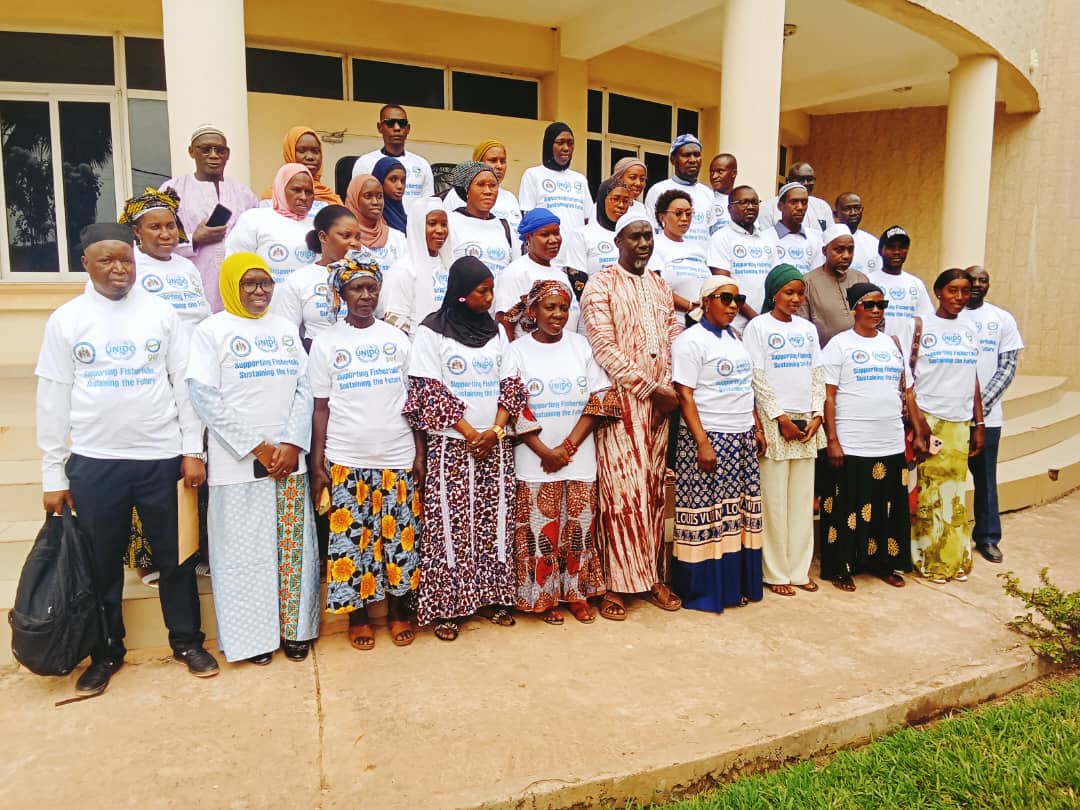
Throughout the program, participants explore topics such as the causes and effects of climate change, harmful human activities contributing to environmental degradation, and the growing threats to marine ecosystems. The sessions also highlight the implications of climate change on fisheries productivity, marine biodiversity, and food security—critical issues for coastal communities.
The workshop features presentations, group discussions, and experience-sharing sessions, allowing fishermen and other stakeholders to identify sustainable practices and propose actionable community strategies. These exchanges have increased awareness of key environmental challenges, including rising sea levels, unpredictable weather patterns, and declining fish stocks.
As the training progresses, it marks an important step toward empowering coastal communities with the knowledge and tools needed to adapt to climate change and safeguard marine resources for future generations.
